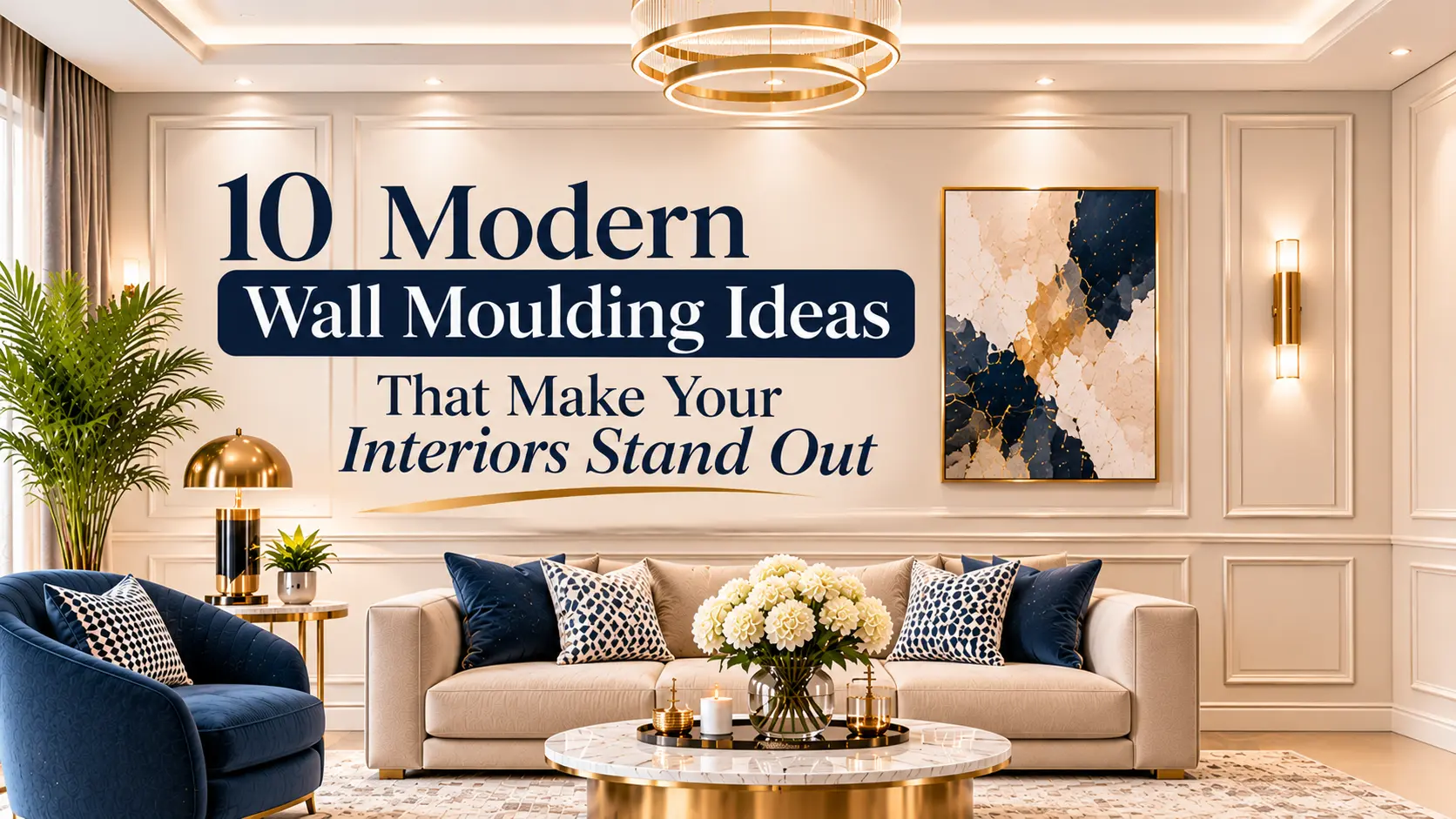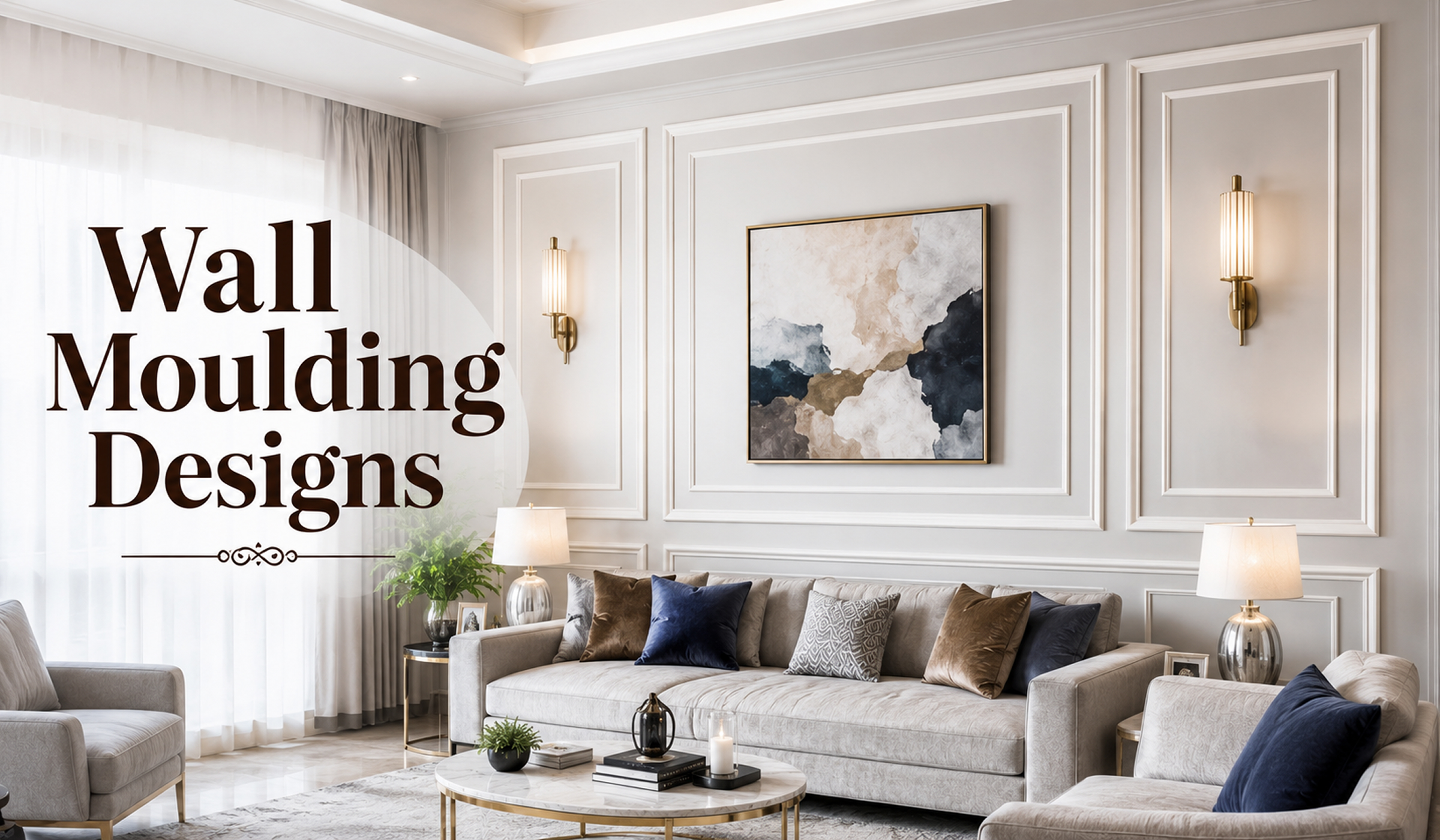
Ever walked into a living room and felt that something was missing, even though the furniture and decor looked just right? Sometimes, it’s the walls. Plain walls can make a room feel unfinished, and adding too many decorative pieces isn't always the answer. A simple wall moulding design can do the job beautifully.
Wall mouldings come in different styles, from simple rectangular panels to detailed decorative patterns. You can also choose from materials like wood, PVC, and plaster, depending on your budget and the look you want. Some designs work beautifully in modern homes, while others bring a classic touch to the interiors.
If you are planning to give your walls a little more character, let’s go through this blog and know some beautiful and trending wall moulding design for 2026 that are worth exploring.
Why is wall moulding becoming a popular choice for living rooms?
Have you ever noticed an immediate sense of elegance and structure when you enter a room? It may have been wall molding that gave you that sense. It is a design element that can transform and upgrade a space. From simple chair railings to intricate molding, design elements like these break up and add texture to a wall and create depth to a two-dimensional surface. Paint cannot create that effect.
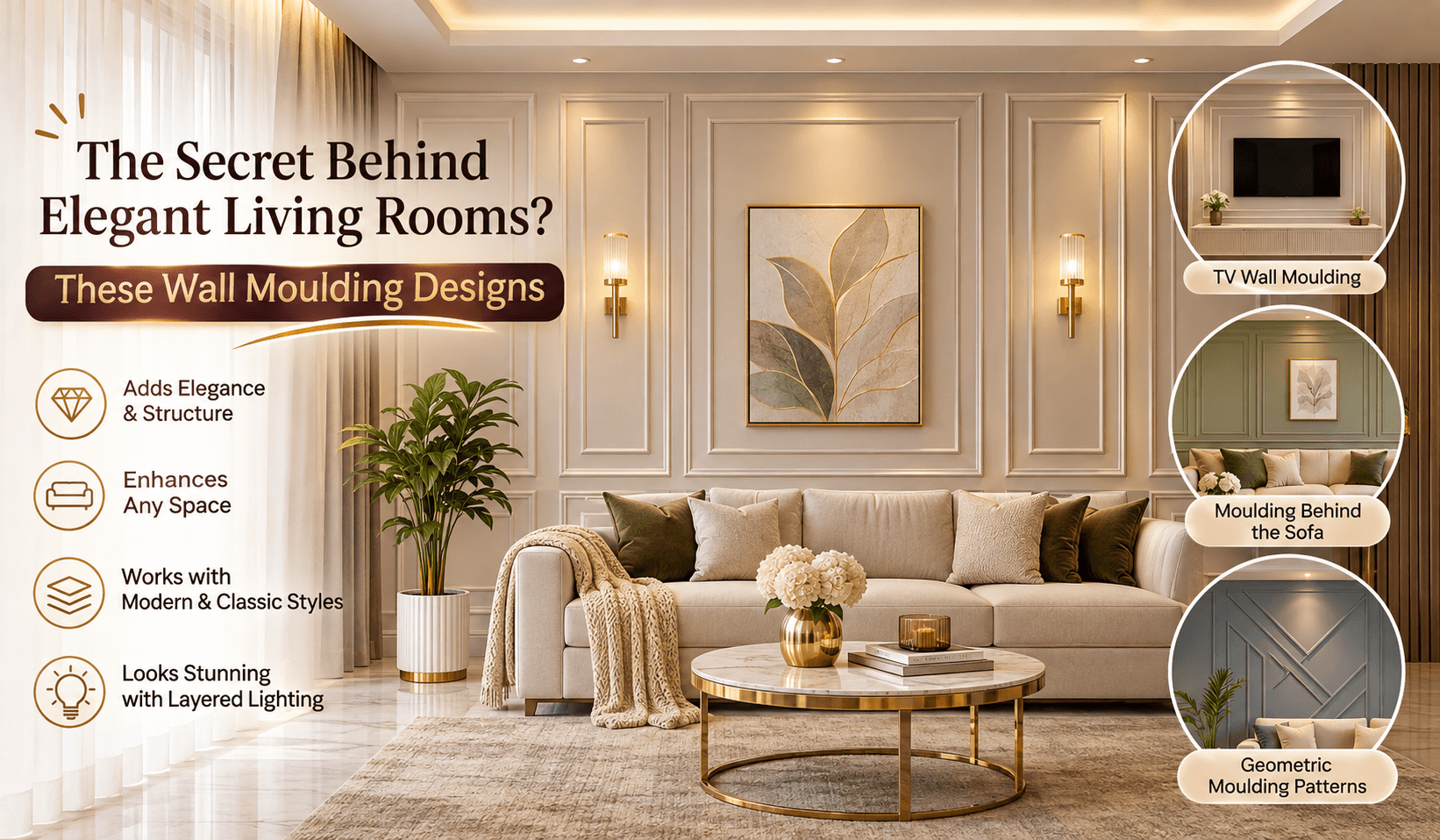
Wall molding provides structure and balance. Here’s why its design relevance will continue:
- It helps create architectural interest without utilizing bulky materials.
- It is appropriate to use in both small apartments and large homes.
- Adds interest to plain walls.
- It is great to use when you have a minimal amount of furniture and decorations.
- It looks great with layered lighting.
11 Modern Wall Moulding Design Ideas for the Living Room
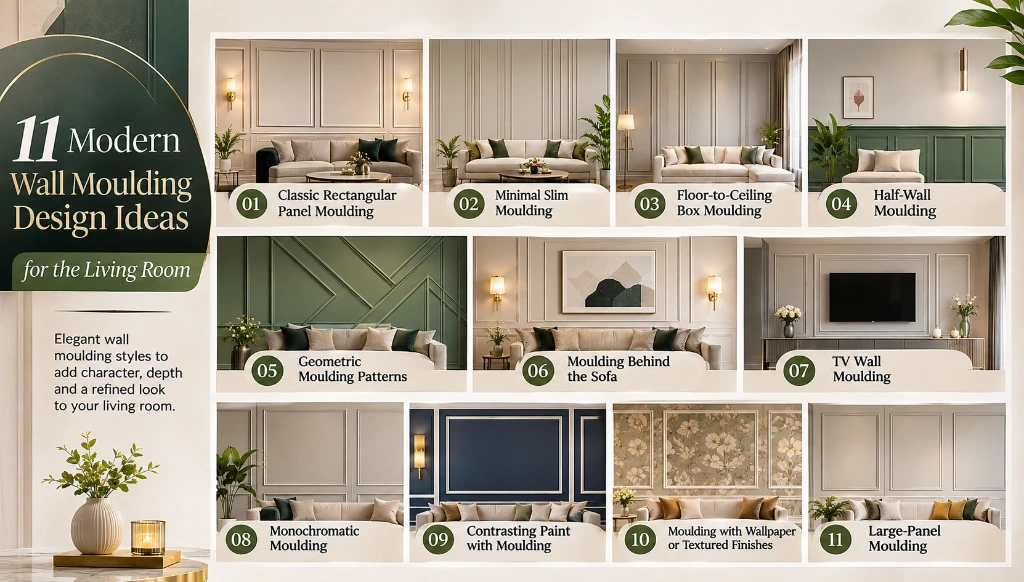
Wall moulding is one of those details that can make a living room look more put-together without adding too much to the walls. Here are 11 modern wall moulding design ideas that you can consider for your living room.
| Modern Wall Moulding Design | Description | Best Suited For |
| Classic Rectangular Panel Moulding | This design uses rectangular frames laid neatly across the wall. It gives a timeless look to the living room and goes well with neutral colors, elegant furniture, and wooden floors. | Classic and elegant living rooms. |
| Minimal Slim Moulding | Simple lines and subtle patterns on a wall, created by thin strips of molding. You can put them vertically or horizontally to add detail without making the space look too decorative. | Small and medium-sized modern living rooms. |
| Floor-to-Ceiling Box Moulding | Tall rectangular panels run from floor to ceiling, making a continuous design. The vertical lines also draw the eye upward, making the room feel taller. | Living rooms with high ceilings and large walls. |
| Half-Wall Moulding | The lower half of the wall is decorated with molding; the upper half is plain or painted a different color. You could also place a decorative ledge between the two sections. | Homes where full-wall decoration feels overwhelming. |
| Geometric Moulding Patterns | With angular shapes, asymmetrical frames, and intersecting lines, this design creates a modern feature wall. Keep the rest of the decor simple so the pattern pops. | Contemporary homes and statement walls. |
| Moulding Behind the Sofa | Rectangular panels behind the sofa make a lovely backdrop to the seating area. Or you can go with two or three larger frames and supplement them with wall lighting or artwork. | Living rooms with a plain wall behind the sofa. |
| TV Wall Moulding | A large molding frame around the TV helps define the entertainment area. Pair it with a floating TV unit, wooden accents, or subtle lighting for a cohesive look. | Modern living rooms with a dedicated TV wall. |
| Monochromatic Moulding | The wall and the molding are painted the same color, giving a subtle layered look to the shadows and raised details. Beige, ivory, greige, and soft gray shades all look great. | Minimalist and luxury-inspired interiors. |
| Contrasting Paint with Moulding | Use contrasting colors to make the molding stand out. Navy blue and white, dark green and cream, or charcoal and light gray are all combinations that make for a striking feature wall. | Living rooms that need a bold focal point. |
| Moulding with Wallpaper or Textured Finishes | You can add wallpaper or textured paint inside the rectangular molding frames. Textures in linen, subtle prints, and soft metallic finishes are all good ways of adding more visual interest. | Living rooms where plain painted walls feel too simple. |
| Large-Panel Moulding | Wide wall surfaces with oversized rectangular frames. A few large panels rather than several small patterns give a clean, balanced look. | Spacious living rooms, villas, and homes with wide walls. |
Tip: Even a simple design, when placed correctly, can make a noticeable difference to your living room.
Which wall moulding material and finish should you choose?
Choosing a wall moulding design is only one part of the job. You also need to select materials and finishes based on how they will affect the walls, the longevity of the moulding and how much it will require maintenance. Choosing a wall moulding design is only one part of the job. You’ll also need to choose the materials and finishes, considering how they’ll affect the walls, how long the molding will last, and how much maintenance it will need.
Here are popular wall molding materials:
- Wood Moulding: Wood moulding is a nice option to amplify the look of traditional living room walls.
- PVC Moulding: PVC moulding is comparatively easier to clean, and the seamless edge prevents trapping of dirt and dust. Hence, it is a good option for modern walls.
- Plaster Moulding: Plaster moulding is relatively flexible, gives a smooth surface, and can be used to create elaborate patterns and designs to enhance the look of walls of traditional and classical living rooms.
- MDF Moulding: Features a smooth surface and readily accepts paint for cleaner, more minimalist designs. Can be used to create more modern designs as well.
Here are popular finishes for wall molding:
- Matte: A soft textured finish with a subtle look of depth that contrasts well with the strong lines of modern and minimalist designs.
- Glossy: Provides a sleek, sophisticated look and reflective surface to the molding.
- Satin: Offers a soft, subtle sheen, not as strong as glossy.
- Wood Finish: for a natural textured look.
- Painted: Use coordinating wall colors to help the molding disappear into the design, or use contrasting wall colors for a statement.
Tips: The selection of wall molding material and finishes depends on your personal tastes, budget, wall conditions, your interior style, and ease of cleaning and maintenance.
What should you check before installing a living room wall moulding?
Wall molding can add to the design of your living room, but if you are not careful with installation, you can waste a lot of money. To prevent the waste of money, remember the following tips:
- Get the measurement of your walls right to determine the distance between your molding panels. This will ensure that your wall molding is evenly and nicely distributed.
- Consider your walls. Are there any cracked or discolored areas or peeling paints? If not dealt with, these could become issues in the long term.
- The height of your ceiling plays a role in the design of your room. Pick a wall moulding design that is in proportion to your ceiling.
- Use large wall moulding designs for large living rooms and thin wall moulding designs for small living rooms.
- Consider your furniture placement. If a large piece of furniture is in the middle of a wall, you could use moulding on that wall to even out the design.
- Pick the type of material for your mold that fits your preferences and needs best.
- Pick a color for your moulding that complements your furniture, wall, and floor colors.
- Maintain equal distances between your moulding frames.
- Figure out where light sources are in your living room to make sure your moulding is highlighted.
- Find a professional that has experience doing this so that you get a quality job.